How to Play Pickleball
Welcome to pickleball! This fast-growing sport combines elements of tennis, badminton, and ping-pong into an exciting game that’s easy to learn but challenging to master.
What You’ll Need
Equipment
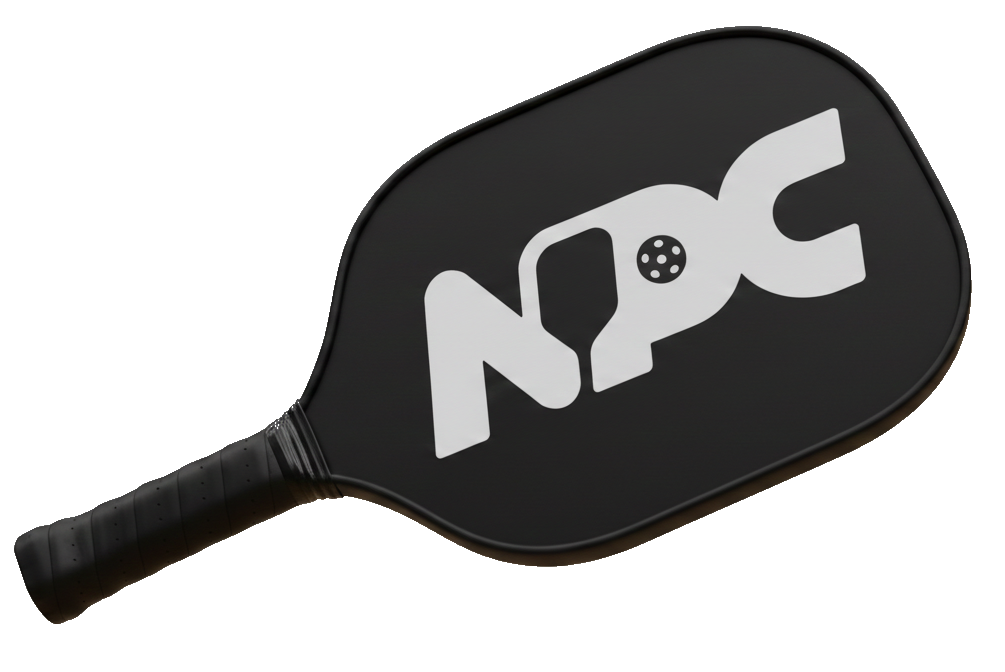
Pickleball Paddle
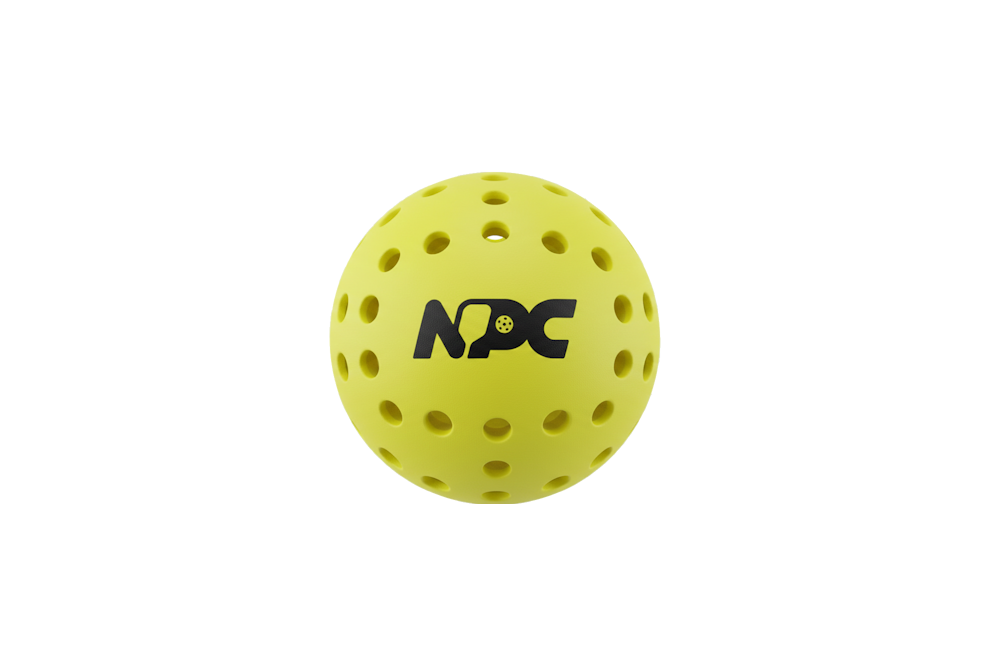
Pickleball Ball
- Paddle: A solid paddle (not stringed like tennis) about twice the size of a ping-pong paddle
- Ball: A plastic wiffle-style ball with holes
- Court: A 20’ x 44’ court (about a third the size of a tennis court). Good news: A badminton court is almost the ideal size for pickleball!
- Net: 36 inches high at the sidelines, 34 inches in the center. A badminton net at approximately half its normal height works perfectly!
Starting out at Norwich Pickleball Club? There’s no need to buy a paddle when you’re just beginning—the club can loan you one at a session. The club also supplies balls at every session, so all you need to do is turn up!
Court Layout
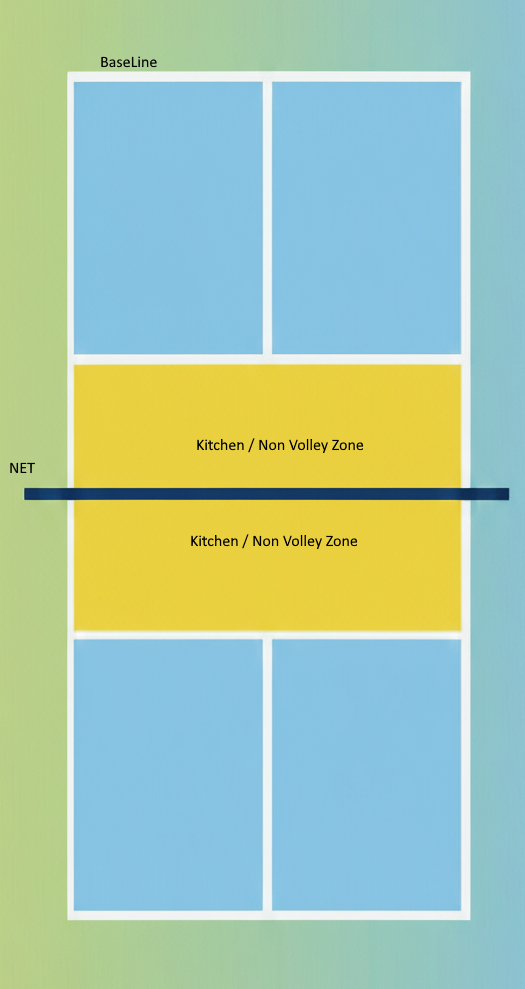
The court is divided into two halves by a net. Each side has:
- A non-volley zone (the “kitchen”) extending 7 feet from the net; yellow area.
- Service boxes behind the kitchen on each side, light blue area.
- Baseline at the back of the court.
At Norwich Pickleball Club: The club uses badminton courts that have been specially marked with a kitchen line for pickleball. This kitchen line is different from the badminton court markings and is positioned slightly further back from the net. Make sure to look for the correct pickleball kitchen line when playing!
Basic Rules for Beginners
Starting the Game
- Scoring: Games are typically played to 11 points (win by 2)
- Only the serving team can score points
- Matches: Usually best of 3 games
At Norwich Pickleball Club, games are played for 9 minutes instead of to 11 points. We don’t play best of 3 matches—instead, we rotate players at sessions so everyone gets a chance to play with different people!
The Serve
- Start from behind the baseline on the right side
- Serve underhand with the paddle below your waist
- Serve diagonally to the opponent’s service box (cross-court)
- The ball must bounce once in the service box
- If you win the point, switch sides and serve from the left
- Keep serving until your team loses the rally
The Two-Bounce Rule
This is key for beginners:
- First bounce: The receiving team must let the serve bounce before returning
- Second bounce: The serving team must let the return bounce before hitting
- After these two bounces, you can hit the ball in the air (volley) or let it bounce
The Kitchen (Non-Volley Zone)
- You cannot volley (hit the ball in the air) while standing in the kitchen
- You CAN step in the kitchen to hit a ball that has bounced
- After a volley, your momentum cannot carry you into the kitchen
Traditional Scoring Explained
- Call the score before each serve: “Server score - Receiver score - Server number”
- Example: “5-3-1” means your team has 5, opponents have 3, and you’re the first server
- Each team gets two serves per service turn (except at the start: only one)
- When both partners have served and lost, the ball goes to the other team
Rally Scoring (Alternative Format)
While Norwich Pickleball Club uses traditional scoring, rally scoring is gaining popularity as an alternative format:
How Rally Scoring Works:
- Both teams can score on every rally, regardless of who served
- Games are typically played to 21 points (or 15 points for shorter games)
- Must still win by 2 points (Note: To manage time, some competitions may play “first to 15 wins” without the win-by-2 requirement—always check at the start)
- Only one serve per side (no second server)
- Score is called as just two numbers: “Server score - Receiver score”
- Court sides are fixed: At the start of the game, you and your partner pick a side (left or right) of the court to play—you never switch sides
- Serving rotates: If you serve and win the point, service for the next point goes to your partner. To help understand this: one player will always serve if your score is even, the other player will always serve if your score is odd.
Key Differences from Traditional Scoring:
- Faster-paced games with more predictable time limits
- Simpler scoring system (no server numbers to track)
- Receiving team can score points
- Matches tend to be shorter and more intense
Why It’s Not Used at Our Club: Traditional scoring is preferred at Norwich Pickleball Club because it:
- Allows for longer rallies and more strategic play
- Gives newer players more time to develop skills
- Fits better with our timed-game format (9 minutes per game)
- Is the standard format most players are familiar with
Basic Gameplay Tips
For Complete Beginners
- Get to the kitchen line: After the two bounces, move up to the non-volley zone line
- Hit the ball softly: Control is more important than power
- Keep the ball low: Aim for your opponent’s feet or the kitchen
- Be patient: Let your opponents make mistakes
- Dink it: Soft shots that land in the kitchen are very effective
Common Shots
- Dink: A soft shot that arcs into the opponent’s kitchen
- Drive: A harder, faster shot hit with more power
- Lob: A high, deep shot to push opponents back
- Drop shot: A soft shot from the baseline that lands in the kitchen
Common Mistakes to Avoid
- Standing too far back: Move up to the kitchen line after the serve exchange
- Hitting too hard: Power without control leads to errors
- Forgetting the two-bounce rule: Let those first two balls bounce!
- Stepping in the kitchen on a volley: Stay behind the line when hitting the ball in the air
- Not calling the score: Always announce the score before serving
- Moving up immediately after you serve: Because of the two-bounce rule, it’s safer to serve and stay back for the return than to move up right away
Doubles vs. Singles
Doubles (Most Common)
- Two players per team (four total)
- Each team has a right and left player
- Partners switch sides only after scoring on their serve
- Both partners get to serve each service turn (except first service of game)
Singles
- One player per team
- Server starts on the right when their score is even
- Server starts on the left when their score is odd
- Covers the whole court yourself
At Norwich Pickleball Club: The majority of our sessions are doubles games. We do occasionally have singles sessions, but singles is not advised for new players as it requires more stamina and court coverage.
Getting Started
Your First Game
- Learn the serve: Practice underhand serving diagonally
- Master the two-bounce rule: This slows the game and gives you time
- Move to the kitchen line: The best position after the serve
- Hit dinks: Practice soft shots into the kitchen
- Have fun: Don’t worry about mistakes - everyone’s learning!
Practice Drills
- Dinking: Stand at the kitchen line and hit soft shots back and forth
- Serve practice: Aim for different areas of the service box
- Drop shots: Practice hitting soft shots from the baseline into the kitchen
- Court positioning: Move as a team, staying parallel with your partner
DUPR Rating System
As you progress in pickleball, you may want to track your skill level using DUPR (Dynamic Universal Pickleball Rating).
What is DUPR?
DUPR is a global rating system that provides every pickleball player with a reliable and accurate skill rating on a scale from 2.000 to 8.000+. Unlike traditional skill levels (3.0, 3.5, 4.0, etc.), DUPR uses algorithms to calculate ratings based on your match results.
Key Features:
- Universal: Works across all levels, from beginner to professional
- Dynamic: Updates after every match you play and record
- Accurate: Considers the strength of your opponents and match scores
- Fair: Helps you find balanced matches with players of similar ability
- Free: Creating an account and tracking your rating is completely free
Why Use DUPR?
- Track your improvement: See your skill level change as you get better
- Find appropriate matches: Play with people at your level
- Tournament seeding: Many tournaments use DUPR for fair bracket placement
- Competitive credibility: A universally recognized measure of your ability
Getting Started with DUPR
Ready to get your rating? Visit mydupr.com to:
- Create your free account
- Log your match results (recreational or tournament play)
- Watch your rating develop over time
- Connect with other players in your area
Note: You don’t need a DUPR rating to play at Norwich Pickleball Club—the club doesn’t record DUPR scores for regular sessions. However, if you get the bug and want to play in competitions, you’ll almost definitely need to set up a DUPR account.
Ready to Play?
Pickleball is all about having fun while getting exercise. Don’t worry about being perfect - the best way to learn is to get on the court and play!
At Norwich Pickleball Club, we welcome players of all skill levels. Come join us and experience why pickleball is the fastest-growing sport in the world!
Have questions? Contact us or join our club to get started!